

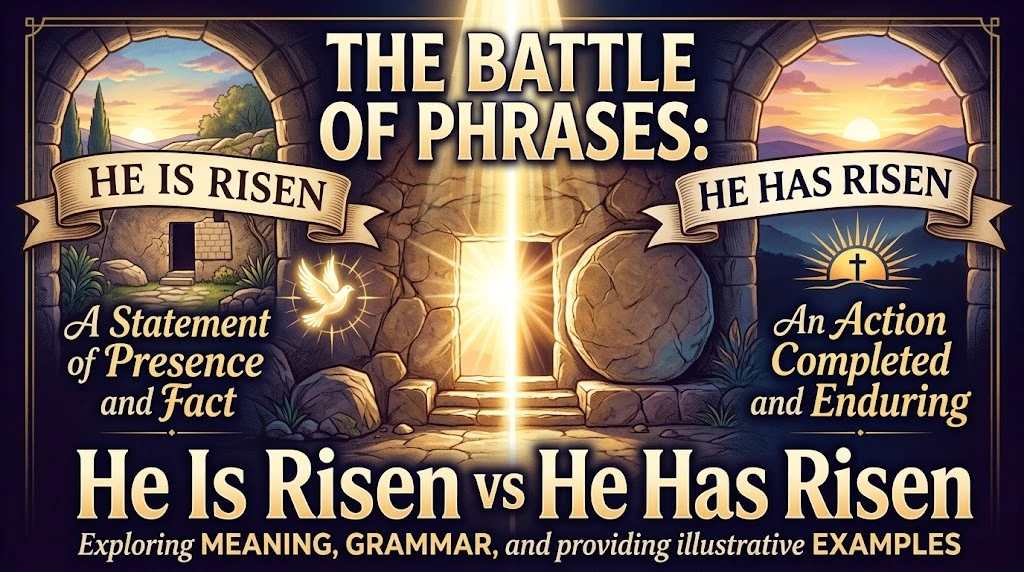
He Is Risen vs He Has Risen is a common question for people learning English grammar, especially around Easter, Christian expressions, and religious language. Both phrases talk about the resurrection of Jesus Christ, but they use different sentence structures and have different styles.
He is risen is a traditional Christian phrase. It is often heard in Easter greetings, church services, Bible discussions, sermons, and religious writing. The phrase has a strong traditional meaning and focuses on the fact that Christ is now alive.
He has risen, on the other hand, follows the normal present perfect tense pattern in modern English. It uses the helping verb “has” with the past participle “risen.” This makes it a clear example of verb usage, English tenses, and standard grammar rules.
Understanding rise, rose, and risen can make this difference much easier. The base verb is rise, the simple past is rose, and the past participle is risen. These verb forms are important for correct sentence formation.
In this guide, we will compare both expressions, explain their grammar meaning, show real-life examples, and discuss their use in religious contexts and modern English.
What Does “He Is Risen” Mean?
He is risen means that he has risen from the dead and is now alive.
In this expression, risen is traditionally understood as a past participle used with is. The phrase has a strong religious and traditional character.
For example:
- He is risen!
- Christ is risen from the dead.
- He is risen indeed!
The phrase is strongly associated with the Christian celebration of Easter.
It is also common in the traditional Easter greeting:
“He is risen!” — “He is risen indeed!”
Here, the focus is on the present state of Christ: he is alive.
What Does “He Has Risen” Mean?
He has risen is a standard present perfect construction.
It uses:
has + past participle
The verb rise has these main forms:
| Form | Verb |
| Base form | rise |
| Past tense | rose |
| Past participle | risen |
| -ing form | rising |
Therefore:
He has + risen = He has risen.
The phrase tells us that the action of rising has happened. It also suggests that the result is important now.
For example:
- He has risen from the dead.
- The sun has risen.
- The temperature has risen.
- The water level has risen.
In ordinary modern English, has risen is the normal grammatical pattern for the present perfect tense.
He Is Risen vs He Has Risen
The main difference is the structure and style of the two expressions.
| Expression | Grammar | Main idea | Style |
| He is risen | Traditional religious construction | He is now alive | Traditional and religious |
| He has risen | Present perfect | He has completed the action of rising | Modern and grammatical |
| He rose | Simple past | He rose at a past time | Historical or narrative |
| He is rising | Present continuous | He is rising now | Ongoing action |
Both He is risen and He has risen can refer to the resurrection.
However, they do not have exactly the same grammatical structure.
Why Is “He Is Risen” Correct?
At first, he is risen may look unusual.
Normally, we expect is + -ing for an action happening now.
For example:
- He is running.
- He is eating.
- He is sleeping.
However, risen is not an ordinary adjective. It is the past participle of rise.
The expression he is risen has an old and traditional English structure. It is especially preserved in religious language.
Modern English usually prefers:
He has risen.
Still, he is risen remains a well-established expression in Christian tradition.
The Verb “Rise”
Understanding rise makes the difference much easier.
Rise is an intransitive verb. This means it normally does not take a direct object.
Its three main forms are:
- Rise — present
- Rose — past
- Risen — past participle
Examples:
- The sun rises in the east.
- The sun rose at six.
- The sun has risen.
- Prices rise every year.
- Prices rose last month.
- Prices have risen again.
Notice that risen normally needs a helping verb in a complete sentence.
For example:
He has risen.
Sentence Structure of “He Has Risen”
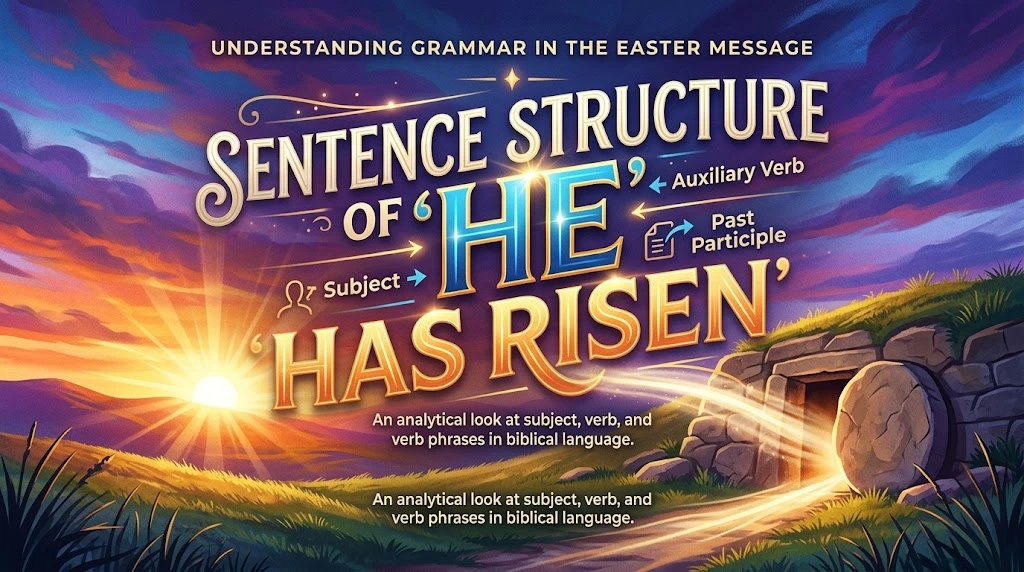
The structure is simple:
Subject + has + past participle
In He has risen:
- He = subject
- has = helping verb
- risen = past participle
This is the basic structure of the present perfect tense.
More examples include:
- She has arrived.
- He has finished.
- The train has left.
- The sun has risen.
- The price has increased.
The same pattern works with many other verbs.
Sentence Structure of “He Is Risen”
The traditional expression follows a different pattern:
Subject + is + risen
Here:
- He = subject
- is = form of the verb be
- risen = past participle
This structure is unusual in everyday modern English. However, it is familiar in religious language.
That is why He is risen can sound natural in an Easter or church setting, even though He has risen is the more familiar present-perfect construction.
He Is Risen: Examples
Here are some natural examples of the traditional expression:
- He is risen!
- Christ is risen from the dead.
- He is risen indeed!
- The message declares that He is risen.
- We celebrate because He is risen.
- The church proclaims that Christ is risen.
- He is risen, just as He promised.
These sentences have a clear religious context.
He Has Risen: Examples
Here are examples using the standard present perfect construction:
- He has risen from the dead.
- Christ has risen, and the tomb is empty.
- He has risen just as the Scriptures predicted.
- The disciples learned that Jesus had risen.
- Christ has risen and brought hope to believers.
- He has risen from the grave.
- Jesus has risen, and His followers rejoice.
The phrase he has risen is grammatically straightforward in modern English.
Is “He Is Risen” Grammatically Correct?
Yes.
He is risen is a recognized and traditional expression. It is especially common in Christian and biblical contexts.
However, it is not the usual pattern used for most modern English verbs.
For everyday modern English, he has risen is generally more natural.
Compare:
- He has risen. — Modern present perfect.
- He is risen. — Traditional religious expression.
So, the choice depends partly on context and style.
Is “He Has Risen” Grammatically Correct?
Yes.
He has risen is completely grammatical.
It uses the present perfect tense:
has + past participle
The past participle of rise is risen.
Therefore:
He + has + risen = He has risen.
This structure is common in modern English.
Common Mistakes
English learners often confuse rise, raise, rose, and risen.
Here are some common mistakes.
Mistake 1: Using “rose” After “has”
❌ He has rose.
✅ He has risen.
After has, we need the past participle.
The past participle of rise is risen, not rose.
Mistake 2: Using “risen” as the Simple Past
❌ He risen yesterday.
✅ He rose yesterday.
The simple past form is rose.
The sentence needs a past-tense verb:
He rose yesterday.
Mistake 3: Confusing Rise and Raise
❌ He raised from the dead.
✅ He rose from the dead.
Rise does not normally take a direct object.
Raise usually needs an object.
For example:
- The sun rose.
- She raised her hand.
Mistake 4: Saying “He Has Rose”
❌ He has rose from the dead.
✅ He has risen from the dead.
Remember:
rise → rose → risen
Rise vs Raise
These two verbs are often confused.
| Verb | Meaning | Example |
| Rise | Move upward by yourself | The sun rises. |
| Raise | Lift something | She raised her hand. |
| Rose | Past form of rise | The sun rose. |
| Risen | Past participle of rise | The sun has risen. |
A simple rule can help:
Rise = something moves upward.
Raise = someone moves something upward.
For example:
- The boy rose from his seat.
- The boy raised his hand.
He Is Risen vs He Has Risen: Which One Should You Use?
Use he is risen when you want a traditional Christian or religious expression.
For example:
He is risen!
This works especially well for:
- Easter greetings
- Church services
- Religious messages
- Hymns
- Sermons
- Traditional Christian writing
Use he has risen when you want a standard modern English construction.
For example:
He has risen from the dead.
This works well in:
- General writing
- Modern explanations
- Grammar discussions
- Historical descriptions
- Contemporary religious writing
Tenses Connection
The difference becomes clearer when we look at tenses.
Simple Past
The simple past uses rose.
He rose from the dead.
This presents the event as something that happened in the past.
Present Perfect
The present perfect uses has risen.
He has risen from the dead.
The action happened in the past, but it has an important connection with the present.
The basic structure is:
Subject + has/have + past participle
Examples:
- He has risen.
- She has arrived.
- They have finished.
- The sun has risen.
Present Continuous
The present continuous uses is rising.
He is rising.
This normally suggests that the action is happening now.
It is different from he is risen.
Compare:
- He is rising. → The action is happening.
- He has risen. → The action has happened.
- He is risen. → Traditional expression describing his risen state.
Clauses and Sentence Patterns
Both expressions can appear in longer sentences.
For example:
We celebrate because He has risen.
The sentence contains a main clause and a dependent clause.
- We celebrate = main clause
- because He has risen = dependent clause
Another example is:
Christ is risen, so we celebrate Easter.
Here, two complete ideas are connected.
You can also use relative clauses:
We celebrate the Christ who has risen from the dead.
These sentence patterns show how the phrase can work naturally in longer English sentences.
What About “He Had Risen”?
He had risen uses the past perfect tense.
The structure is:
Subject + had + past participle
Therefore:
He had risen.
This tense is useful when one past event happened before another past event.
For example:
By the time the disciples arrived, He had risen.
The phrase had risen shows that the rising happened before another past event.
This is the correct use of the use of had in this context.
What About “He Will Rise”?
He will rise uses the future form.
The structure is:
Subject + will + base verb
Therefore:
He will rise.
Notice that we use rise, not risen, after will.
Compare:
- He will rise.
- He rose.
- He has risen.
- He had risen.
These forms are different because they belong to different tense structures.
Quick Grammar Guide
Here is a simple way to remember the forms:
| Tense/Form | Example |
| Present | He rises. |
| Simple past | He rose. |
| Present perfect | He has risen. |
| Past perfect | He had risen. |
| Future | He will rise. |
| Present continuous | He is rising. |
| Traditional religious expression | He is risen. |
This pattern is more useful than trying to memorize the expressions separately.
Do “Has” and “Have” Work the Same Way?
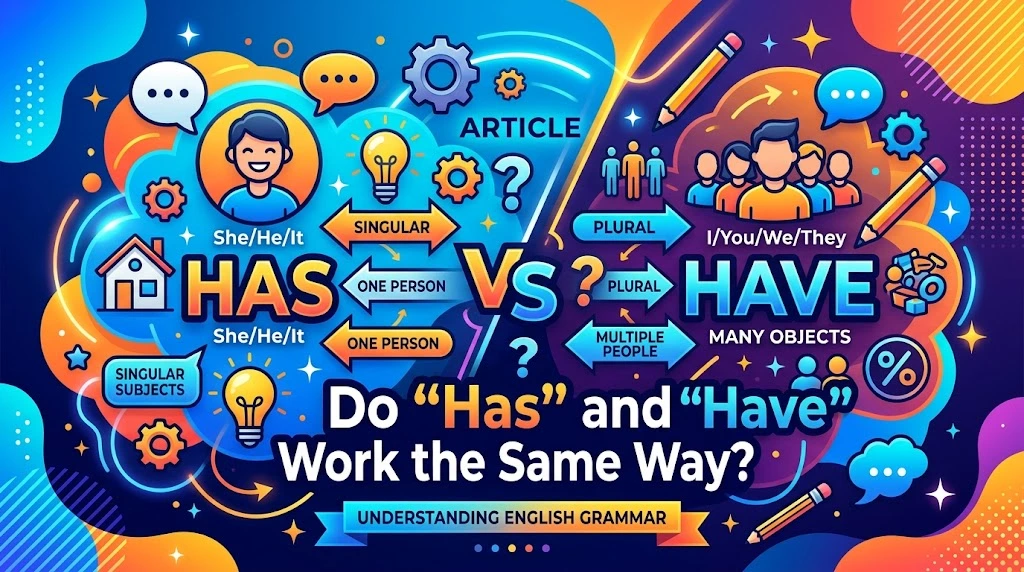
The choice between has vs have depends on the subject.
Use has with:
- He
- She
- It
- Singular nouns
Use have with:
- I
- You
- We
- They
- Plural nouns
Examples:
- He has risen.
- She has arrived.
- They have arrived.
- We have finished.
So, we say he has risen, not he have risen.
Other Useful Examples of Verb Forms
The same tense patterns appear with many verbs.
For example:
- She has gone home.
- He has written a letter.
- They have eaten dinner.
- The train has left.
- The sun has risen.
The important point is that the present perfect uses a form of have plus a past participle.
FAQs
Is “He is risen” grammatically correct?
Yes. He is risen is a traditional and well-established Christian expression. It is especially common in Easter messages, church services, and religious writing.
Is “He has risen” grammatically correct?
Yes. He has risen is a standard example of the present perfect tense. The structure is subject + has + past participle.
What is the difference between “He is risen” and “He has risen”?
He is risen is a traditional religious expression, while He has risen uses the standard present perfect tense. Both can describe the resurrection.
What is the past participle of “rise”?
The past participle of rise is risen. The three main forms are rise, rose, and risen.
Should I say “He rose” or “He has risen”?
Both can be correct, but they have different tense meanings. He rose uses the simple past, while He has risen uses the present perfect.
Is “He has rose” correct?
No. The correct form is He has risen. After has, we use the past participle. The correct forms are rise → rose → risen.
Why is “He is risen” used at Easter?
He is risen is a traditional Easter expression that announces the resurrection of Jesus Christ. It is deeply established in Christian tradition and worship.
Which phrase is more natural in modern English?
He has risen is more natural as a standard modern English grammar construction. He is risen remains natural and appropriate in a traditional religious context.
Conclusion
The difference between He is risen and He has risen is mainly about grammar, style, and context. Both expressions can refer to the resurrection of Jesus, but they are not built in exactly the same way.
He is risen is a traditional religious expression. It is closely connected with Easter, Christian worship, and biblical language. It sounds formal, traditional, and familiar in a church setting.
He has risen is the standard present perfect construction in modern English. It follows the simple pattern has + past participle. Since risen is the past participle of rise, the sentence is grammatically clear and natural.
Remember the basic verb forms:
rise → rose → risen
Use rose for the simple past and risen after has, have, or had.
For a traditional Easter message, He is risen is appropriate. For standard modern grammar, He has risen is the natural choice.

2 thoughts on “He Is Risen vs He Has Risen: Meaning, Grammar, and Examples”