

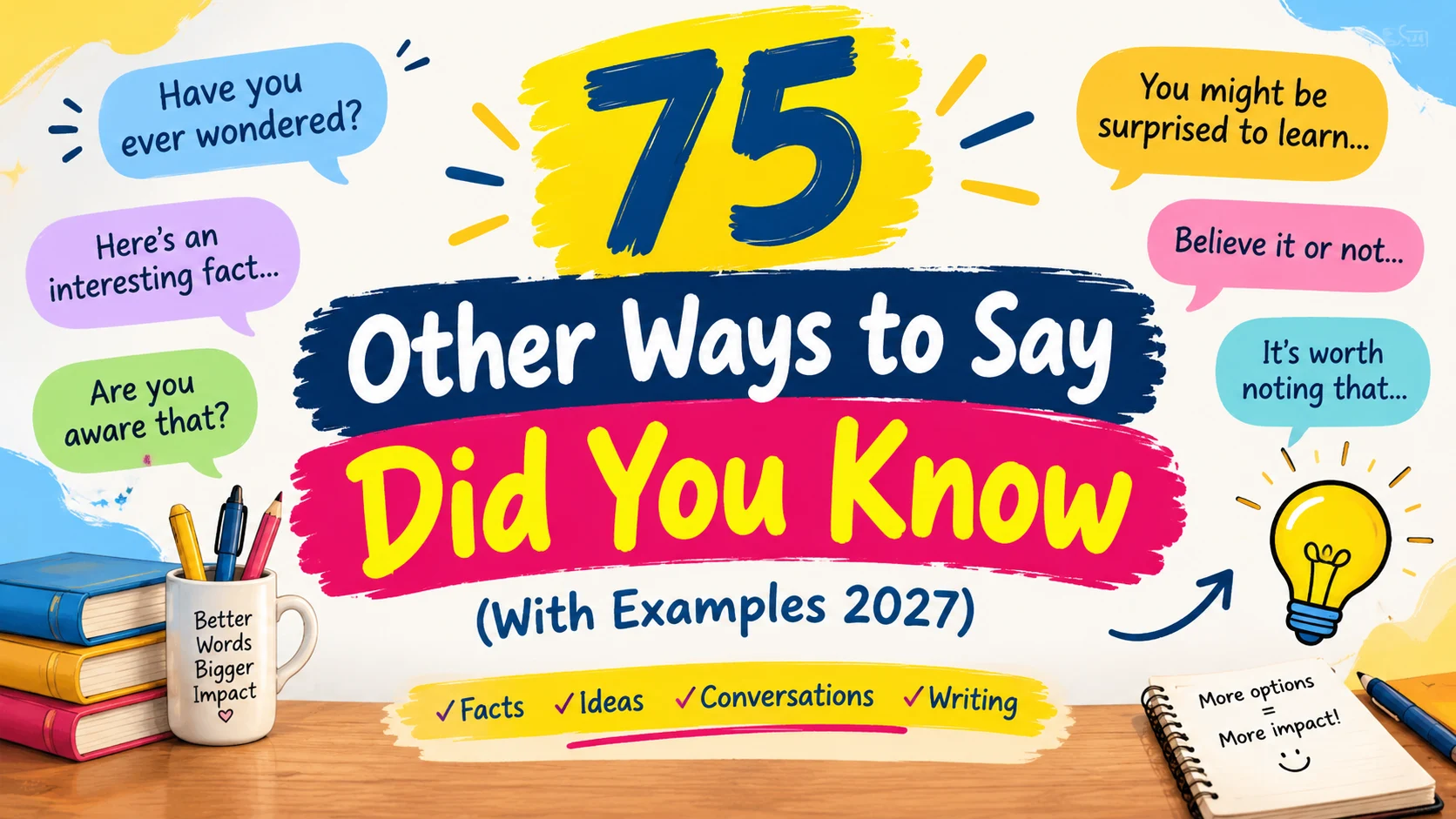
The phrase “Did you know?” is a simple way to share interesting facts, introduce surprising information, or make someone curious. You can use it in conversations, blog posts, presentations, social media captions, and educational content. However, repeating the same phrase can make your writing sound predictable.
Fortunately, there are many other ways to say “Did you know?” that can make your words more engaging. For example, you can say “Have you ever wondered?”, “Are you aware that?”, or “Here’s an interesting fact.” Each expression has a slightly different tone and purpose.
In this guide, you’ll discover useful alternatives for casual conversations, professional writing, educational articles, and attention-grabbing introductions. You’ll also learn when to use each phrase and how to make your sentences sound natural. These alternatives will help you share information clearly, capture attention, and keep your readers interested.
Did You Know?
The phrase “Did you know?” is a question that introduces information someone may not have heard before. It often appears before an interesting fact, a surprising discovery, or a useful piece of knowledge.
The phrase uses the simple past tense of do because it asks whether someone already knew something. However, its meaning often relates to the person’s knowledge in the present.
For example:
- Did you know that honey can last for a very long time when stored properly?
- Did you know that octopuses have three hearts?
- Did you know that learning a new language can improve communication skills?
Writers often use this expression to create curiosity. It works especially well in educational articles, newsletters, quizzes, and social media posts.
Still, you don’t always need to use the same question. Expressions such as “Here’s a surprising fact” and “Have you ever wondered?” can create a similar effect while making your writing more varied.
What Does “Did You Know?” Mean?
“Did you know?” means “Were you already aware of this information?” People use it to introduce facts, share discoveries, or tell others something interesting.
The phrase can serve several purposes:
- Share knowledge: Introduce a useful fact.
- Create curiosity: Encourage someone to keep reading.
- Start a conversation: Give people something interesting to discuss.
- Educate readers: Explain a new concept.
- Capture attention: Make a headline, presentation, or post more engaging.
For example, a teacher might ask, “Did you know that some plants can survive in deserts?” A blogger might write, “Here’s something you might not know about English grammar.”
Both expressions introduce new information, but the second sounds more conversational.
The best alternative depends on your audience, topic, and purpose. A formal report may need “It is worth noting that,” while a friendly social media post may work better with “Guess what?”
Read More: Might as Well vs Mine as Well vs Mind as Well: Meaning, Grammar Rules, and Examples
Professional Alternatives
In professional settings, the best alternative should sound clear, respectful, and appropriate for the audience. Some expressions invite curiosity, while others introduce important information directly.
Here are useful choices for business writing, academic articles, presentations, and workplace communication.
- Are you aware that? — Suitable for formal questions about information or procedures.
- Have you considered? — Useful when introducing an idea or asking someone to think about an option.
- It’s worth noting that. — Introduces an important detail in reports and articles.
- An interesting fact is that. — Presents information in a clear, informative way.
- You may be interested to learn that. — Shares information politely.
- Research shows that. — Introduces research findings when reliable evidence supports the claim.
- One important point is that. — Highlights a key detail.
- Here’s something worth knowing. — Sounds friendly while remaining suitable for many professional settings.
- A lesser-known fact is that. — Introduces information that may be unfamiliar to readers.
- For your information. — Shares relevant information directly, although it can sound formal or abrupt in some contexts.
For example, instead of writing “Did you know that customer satisfaction has improved?”, a business report could say, “It’s worth noting that customer satisfaction has improved.”
Choose expressions that fit the meaning. Use “Research shows that” only when you have reliable research to support the statement.
10 Synonyms and Alternatives for “Did You Know?”
The following expressions are useful in different situations. Each one offers a slightly different tone, so you can choose the phrase that best fits your message.
1. Have You Ever Wondered?
Definition: This expression asks whether someone has ever thought about a particular question, possibility, or mystery.
Meaning: Have you ever thought about this question before?
Examples:
- Have you ever wondered why the sky changes color at sunset?
- Have you ever wondered how your favorite website was created?
Detailed Explanation: This phrase works well when you want readers to think about a question before revealing the answer. It creates curiosity rather than simply presenting a fact. Bloggers often use it at the beginning of educational articles. It is more reflective than “Did you know?” because it invites the audience to consider an idea.
Tone: Curious, friendly, conversational.
Best Use: Use it for blog introductions, educational videos, storytelling, and questions that encourage further thought.
2. Are You Aware That?
Definition: This expression asks whether someone knows or understands a particular fact, situation, rule, or piece of information.
Meaning: Do you know about this fact or situation?
Examples:
- Are you aware that the meeting starts at nine?
- Are you aware that regular backups can protect important files?
Detailed Explanation: This phrase sounds more formal than “Did you know?” It is useful when you need to check someone’s knowledge or draw attention to an important detail. In workplace communication, it can help introduce policies or practical information. However, it may sound confrontational if the listener thinks you are criticizing their knowledge.
Tone: Formal, professional, informative.
Best Use: Use it in workplace discussions, formal emails, presentations, and conversations about important information.
3. Here’s an Interesting Fact
Definition: This expression introduces a fact that the speaker believes will inform, surprise, or interest the audience.
Meaning: I want to share something interesting with you.
Examples:
- Here’s an interesting fact: some turtles can live for more than a century.
- Here’s an interesting fact about English: some words have several different meanings.
Detailed Explanation: This phrase presents information directly without asking the audience a question. It works well when you want to move quickly into the main point. It also sounds natural in educational content and social media posts. Unlike “Did you know?”, it does not suggest that the reader should already have known the information.
Tone: Friendly, informative, engaging.
Best Use: Use it in fact-based articles, classroom discussions, newsletters, and short educational posts.
4. Believe It or Not
Definition: This expression introduces information that seems surprising, unusual, or difficult to believe at first.
Meaning: This may sound surprising, but it is true.
Examples:
- Believe it or not, some animals can survive for weeks without food.
- Believe it or not, I finished the entire project in one afternoon.
Detailed Explanation: This phrase adds a sense of surprise to a statement. It works best when the information genuinely seems unusual. In casual conversations, it can make a story more entertaining. For formal writing, however, a direct introduction may be more appropriate, especially when discussing serious or technical subjects.
Tone: Casual, expressive, playful.
Best Use: Use it in storytelling, informal articles, conversations, and entertaining social media content.
5. You Might Be Surprised to Learn
Definition: This phrase prepares the audience for information that may challenge their expectations or reveal an unfamiliar fact.
Meaning: This information may surprise you.
Examples:
- You might be surprised to learn that some birds can recognize human faces.
- You might be surprised to learn how much sleep teenagers need.
Detailed Explanation: This expression builds anticipation before presenting a fact. It suggests that the information may be different from what the reader expects. It works well in educational articles and informative presentations. Unlike “Believe it or not,” it sounds more polished and less dramatic.
Tone: Engaging, informative, moderately formal.
Best Use: Use it in blog posts, educational resources, presentations, and articles introducing unexpected findings.
6. Here’s Something You Might Not Know
Definition: This expression introduces information that the audience may not have encountered or learned before.
Meaning: I want to share a fact you may not know.
Examples:
- Here’s something you might not know: some plants respond to changes in light.
- Here’s something you might not know about writing: short sentences can improve readability.
Detailed Explanation: This phrase feels personal and conversational. It suggests that the speaker is sharing useful information with the reader. It is especially effective when the fact relates directly to the audience’s interests. Because it is informal, it may be less suitable for highly technical reports or formal academic papers.
Tone: Friendly, conversational, helpful.
Best Use: Use it in blogs, social media captions, tutorials, and everyday conversations.
7. It’s Worth Knowing That
Definition: This expression introduces information that the speaker considers useful, important, or relevant to the audience.
Meaning: This is useful information you should know.
Examples:
- It’s worth knowing that deadlines may change during the application process.
- It’s worth knowing that regular practice helps build writing confidence.
Detailed Explanation: This phrase emphasizes the practical value of information. It is less focused on surprise than “Did you know?” and more focused on usefulness. Writers can use it to highlight tips, warnings, or details that readers should remember. It also fits naturally into professional articles and explanatory guides.
Tone: Informative, professional, practical.
Best Use: Use it in how-to articles, workplace guides, educational content, and advice-based writing.
8. Have You Heard That?
Definition: This expression asks whether someone has received or encountered particular information, news, or a story.
Meaning: Have you already heard this information?
Examples:
- Have you heard that the library is opening a new section?
- Have you heard that our school is organizing a science fair?
Detailed Explanation: This phrase is common in everyday conversation. It often introduces news, announcements, or recent developments rather than general facts. It works best when the information may already be circulating among people. Unlike “Have you ever wondered?”, it asks about prior exposure to information rather than inviting someone to consider a question.
Tone: Casual, social, conversational.
Best Use: Use it when sharing news with friends, classmates, colleagues, or people who may be interested in a recent development.
9. One Thing You May Not Realize
Definition: This expression introduces a detail or consequence that the audience may have overlooked or failed to consider.
Meaning: There is an important detail you may have missed.
Examples:
- One thing you may not realize is that small edits can change a sentence’s meaning.
- One thing you may not realize is how much planning a successful presentation requires.
Detailed Explanation: This phrase draws attention to an overlooked point. It is especially useful when explaining a complicated subject or offering advice. It can encourage readers to look beyond the obvious answer. Use a respectful tone so that the phrase does not sound as though you are questioning the reader’s intelligence.
Tone: Thoughtful, explanatory, professional.
Best Use: Use it in tutorials, educational articles, workplace training, and analytical discussions.
10. Let’s Explore Something Interesting
Definition: This expression invites the audience to examine a topic, idea, or fact that may provide useful knowledge or insight.
Meaning: Let’s learn about something interesting together.
Examples:
- Let’s explore something interesting about the English language.
- Let’s explore something interesting about how plants grow.
Detailed Explanation: This phrase creates a sense of shared discovery. It is especially helpful when introducing a topic that needs explanation rather than a single fact. The word “let’s” makes the audience feel included in the learning process. Unlike “Did you know?”, it focuses on exploring information together instead of checking prior knowledge.
Tone: Friendly, educational, inviting.
Best Use: Use it in lessons, presentations, videos, blog introductions, and educational newsletters.
More Ways to Say “Did You Know?”
Here are additional expressions you can use to keep your writing fresh and interesting.
11. Did You Ever Know?
This wording is not natural in most standard English contexts. Use “Did you know?” or “Have you ever heard of?” instead.
Example: Have you ever heard of this unusual animal?
12. Have You Heard About This?
Use this phrase to introduce news, an event, or a topic that may interest someone.
Example: Have you heard about the new community library?
13. Here’s a Fun Fact
Use this casual expression before an entertaining or surprising piece of information.
Example: Here’s a fun fact: some penguin species use stones when building nests.
14. For Your Information
Use this phrase to share information someone may need. In some situations, it can sound abrupt.
Example: For your information, the deadline has moved to Friday.
15. It’s Interesting to Note That
Use this phrase to highlight a detail that deserves attention.
Example: It’s interesting to note that reading habits vary across age groups.
16. One Interesting Thing Is
Use this expression to introduce a notable feature or observation.
Example: One interesting thing is that the building uses natural light throughout the day.
17. Here’s a Little-Known Fact
Use this phrase when introducing information that is not widely known.
Example: Here’s a little-known fact about the city: its oldest bridge is still in use.
18. Did You Realize?
Use this question to draw attention to a fact or consequence.
Example: Did you realize how much water a leaking tap can waste?
19. Have You Considered This?
Use it to encourage someone to think about an idea or alternative.
Example: Have you considered this approach to improving your study routine?
20. Something Worth Mentioning Is
Use this phrase to introduce a relevant detail in an explanation.
Example: Something worth mentioning is that the course includes practical exercises.
21. You May Not Know This, But
Use this friendly phrase before sharing an unfamiliar fact.
Example: You may not know this, but the museum offers free entry on certain days.
22. Here’s a Surprising Fact
Use it when the information is genuinely unexpected.
Example: Here’s a surprising fact: some metals can be liquid near room temperature.
23. Did It Ever Occur to You?
Use this phrase to introduce an idea someone may not have considered.
Example: Did it ever occur to you that your daily habits shape your long-term goals?
24. Let Me Share Something Interesting
Use this phrase when you want to introduce information in a personal, conversational way.
Example: Let me share something interesting about how memory works.
25. You Should Know That
Use this expression to highlight important information. It can sound firm, so use it carefully.
Example: You should know that the entrance closes at six.
26. It’s Good to Know That
Use it to share helpful information in a friendly way.
Example: It’s good to know that the software saves your work automatically.
27. A Useful Fact Is
Use this direct phrase to introduce practical information.
Example: A useful fact is that regular breaks can help you maintain concentration.
28. Here’s What You Need to Know
Use it to introduce essential details or a concise explanation.
Example: Here’s what you need to know before applying for the course.
29. Let’s Look at This Fact
Use this phrase to guide readers toward a particular piece of information.
Example: Let’s look at this fact before comparing the two options.
30. Have You Noticed?
Use it to ask whether someone has observed a pattern or detail.
Example: Have you noticed how the light changes throughout the afternoon?
31. Here’s an Eye-Opening Detail
Use this expression for information that changes how people understand a topic.
Example: Here’s an eye-opening detail about household energy use.
32. One Fact That Stands Out Is
Use it when highlighting an especially notable point among several facts.
Example: One fact that stands out is the sharp increase in enrollment.
33. It’s Surprising to Learn That
Use this phrase to emphasize unexpected information.
Example: It’s surprising to learn that some desert plants bloom only after rainfall.
34. A Point Worth Remembering Is
Use it to introduce information readers should keep in mind.
Example: A point worth remembering is that clear writing starts with a clear idea.
35. Let’s Uncover Something New
Use this inviting phrase when introducing a discovery or learning activity.
Example: Let’s uncover something new about the history of our city.
36. Here’s a Fact You May Have Missed
Use it when sharing information that may have escaped the audience’s attention.
Example: Here’s a fact you may have missed: the event also includes free workshops.
37. Are You Familiar With?
Use it to ask whether someone knows a subject, concept, or method.
Example: Are you familiar with the rules of academic referencing?
38. You May Find It Interesting That
Use this phrase to introduce information that may appeal to a particular audience.
Example: You may find it interesting that many languages borrow words from one another.
39. Let Me Point Out Something
Use it to draw attention to a relevant detail.
Example: Let me point out something important about the final paragraph.
40. Consider This Interesting Point
Use this expression to invite readers to think carefully about an idea.
Example: Consider this interesting point: a simple change in wording can affect a reader’s reaction.
41. Here’s a Remarkable Fact
Use it when the information is notable or impressive.
Example: Here’s a remarkable fact about space exploration.
42. Something You Might Find Surprising
Use this phrase to introduce an unexpected detail without overstating it.
Example: Something you might find surprising is how differently people interpret the same message.
43. Have You Thought About?
Use it to invite someone to consider a possible choice or idea.
Example: Have you thought about learning another language?
44. One Detail to Keep in Mind
Use it to introduce a practical consideration.
Example: One detail to keep in mind is the time needed to complete the application.
45. Let Me Tell You Something Interesting
Use this conversational phrase to introduce a story or fact.
Example: Let me tell you something interesting about the history of photography.
46. Here’s a Fact That May Surprise You
Use it to prepare readers for unexpected information.
Example: Here’s a fact that may surprise you: some flowers open and close in response to light.
47. It’s Fascinating to Discover That
Use it when discussing a finding or idea that inspires curiosity.
Example: It’s fascinating to discover that languages change over time.
48. One Thing That Deserves Attention
Use it to emphasize a detail that readers should examine.
Example: One thing that deserves attention is the effect of clear instructions on learning.
49. Let’s Take a Closer Look
Use this phrase when you want to examine a subject in greater detail.
Example: Let’s take a closer look at the differences between these expressions.
50. Did You Know About This?
Use it in casual conversation when referring to a particular fact, event, or discovery.
Example: Did you know about this free online course?
51. Here’s an Important Detail
Use it to introduce information that directly affects the topic.
Example: Here’s an important detail: all applications must include a valid email address.
52. It’s Useful to Understand That
Use this phrase before explaining a concept that helps readers understand the subject.
Example: It’s useful to understand that verbs change form according to tense and subject.
53. An Interesting Point to Consider
Use it to introduce an idea that deserves reflection.
Example: An interesting point to consider is how word choice changes the tone of an email.
54. You Might Want to Know
Use this friendly phrase when sharing potentially helpful information.
Example: You might want to know that registration closes next week.
55. Here’s Something Remarkable
Use it to introduce something impressive, unusual, or worthy of attention.
Example: Here’s something remarkable about the project: volunteers completed it in only three weeks.
56. Let’s Discover Why
Use this phrase to introduce an explanation or investigation.
Example: Let’s discover why some words have more than one spelling.
57. Have You Come Across This?
Use it when asking whether someone has encountered a particular idea, term, or situation.
Example: Have you come across this expression in your reading?
58. There’s Something Interesting About
Use it to introduce a notable feature of a person, place, thing, or idea.
Example: There’s something interesting about this old building: its design combines several architectural styles.
59. A Little-Known Detail Is
Use it to present information that may be unfamiliar to many readers.
Example: A little-known detail is that the original plan included a much larger garden.
60. Let Me Share a Quick Fact
Use it to introduce a short piece of information without slowing down the conversation.
Example: Let me share a quick fact about the English alphabet.
61. One Thing You Should Understand
Use it to introduce a key idea that helps explain a larger topic.
Example: One thing you should understand is that practice improves skill over time.
62. Here’s Something Fascinating
Use this friendly expression to introduce an intriguing fact or discovery.
Example: Here’s something fascinating about the ocean: scientists continue to study many of its unexplored areas.
63. Have You Ever Thought About Why?
Use it to introduce a question that encourages deeper thinking.
Example: Have you ever thought about why some stories stay in our memories?
64. It’s Interesting to Discover
Use it when presenting a finding or observation.
Example: It’s interesting to discover how different cultures express politeness.
65. Let’s Think About This
Use it to encourage the audience to consider an idea before reaching a conclusion.
Example: Let’s think about this before choosing the best solution.
66. An Unexpected Fact Is
Use it to introduce information that differs from common expectations.
Example: An unexpected fact is that the simplest solution is not always the fastest.
67. Here’s a Helpful Insight
Use it to share an idea that improves understanding or decision-making.
Example: Here’s a helpful insight: planning your main points can make presentations clearer.
68. You May Be Surprised to Discover
Use it to introduce a discovery that may challenge assumptions.
Example: You may be surprised to discover how many words English has borrowed from other languages.
69. One Remarkable Thing Is
Use it to emphasize an unusual or impressive quality.
Example: One remarkable thing is how quickly the team adapted to the new system.
70. Let Me Draw Your Attention To
Use this phrase to highlight an important detail in a document, presentation, or discussion.
Example: Let me draw your attention to the final paragraph of the report.
71. Here’s a Point You May Have Overlooked
Use it to highlight a detail someone may not have considered.
Example: Here’s a point you may have overlooked: the new plan also reduces maintenance costs.
72. Something You Should Be Aware Of
Use it to introduce information that may affect a decision or action.
Example: Something you should be aware of is that the building has limited parking.
73. Let’s Explore This Further
Use it to move from a brief introduction into a deeper explanation.
Example: Let’s explore this further by comparing the two approaches.
74. Here’s What Makes This Interesting
Use it to explain why a fact, discovery, or situation deserves attention.
Example: Here’s what makes this interesting: both solutions achieve the same result in different ways.
75. The Interesting Part Is
Use it to direct attention toward the most notable aspect of a story or explanation.
Example: The interesting part is that both teams reached the same conclusion independently.
How to Choose the Best Alternative
Not every alternative works in every situation. The best phrase depends on your audience, purpose, and tone.
| Situation | Best alternative | Example |
| Casual conversation | Have you heard that? | Have you heard that the café has reopened? |
| Educational blog | Here’s an interesting fact | Here’s an interesting fact about the English language. |
| Professional report | It’s worth noting that | It’s worth noting that costs have decreased. |
| Academic writing | Research shows that | Research shows that regular practice supports learning. |
| Social media | Here’s a fun fact | Here’s a fun fact about animals. |
| Storytelling | Believe it or not | Believe it or not, we finished before sunset. |
| Giving advice | One thing you may not realize | One thing you may not realize is how much planning helps. |
| Presentation | Let me draw your attention to | Let me draw your attention to the final result. |
| Introducing a mystery | Have you ever wondered? | Have you ever wondered why the moon appears to change shape? |
| Sharing practical advice | It’s good to know that | It’s good to know that the course includes practice tests. |
Before choosing an expression, ask yourself three questions:
- What is my purpose? Am I sharing a fact, asking a question, or giving advice?
- Who is my audience? Am I speaking to friends, students, customers, or colleagues?
- What tone do I need? Should the sentence sound casual, professional, curious, or serious?
These questions will help you choose a phrase that sounds natural instead of forced.
Frequently Asked Questions
1. What Are the Best Other Ways to Say “Did You Know?”
Some useful alternatives are “Have you ever wondered?”, “Here’s an interesting fact,” “Are you aware that?”, “Believe it or not,” and “It’s worth noting that.” Choose one based on your audience and purpose.
2. What Is a Professional Way to Say “Did You Know?”
Professional alternatives include “Are you aware that?”, “It’s worth noting that,” “You may be interested to learn that,” and “One important point is that.” These expressions work well in presentations, reports, and workplace communication.
3. How Can I Say “Did You Know?” in a More Interesting Way?
Try “Here’s a surprising fact,” “You might be surprised to learn,” or “Have you ever wondered?” These expressions can create curiosity and encourage readers to continue reading.
4. What Is a Casual Alternative to “Did You Know?”
Casual options include “Guess what?”, “Have you heard about this?”, “Here’s a fun fact,” and “You may not know this, but.” They work well in conversations, text messages, and social media posts.
5. How Do I Use “Did You Know?” in an Article?
Use the phrase before a relevant fact that supports your topic. For example, “Did you know that short paragraphs can make online articles easier to read?” Make sure the information is accurate and useful to your readers.
Conclusion
There are many other ways to say “Did you know?”, and each expression can make your writing more engaging when used correctly. Phrases such as “Here’s an interesting fact,” “Have you ever wondered?”, and “You might be surprised to learn” work well when you want to create curiosity. Meanwhile, “It’s worth noting that” and “Are you aware that?” are useful in professional and academic settings.
The key is to choose words that match your audience, tone, and purpose. A casual conversation may call for a friendly question, while a formal report needs a clear and professional expression. Avoid repeating the same phrase too often, but do not replace simple wording just for variety. Clear, natural writing should always come first. Use these alternatives to share facts, introduce new ideas, and keep readers interested. When your word choice fits the context, your message becomes more effective, memorable, and enjoyable to read.

1 thought on “75 Other Ways to Say Did You Know (With Examples 2027)”